
Fixed permanent magnet, mobile permanent magnet, or electromagnetic magnet?
The choice of an overband affects your sorting efficiency, energy costs, and maintenance. Each technology responds to specific constraints: stable or variable flow, fixed or mobile installation, need for control or desire for autonomy. Lenoir-Mec offers you a clear overview of the three main options on the market to help you identify the one that truly corresponds to your production configuration.
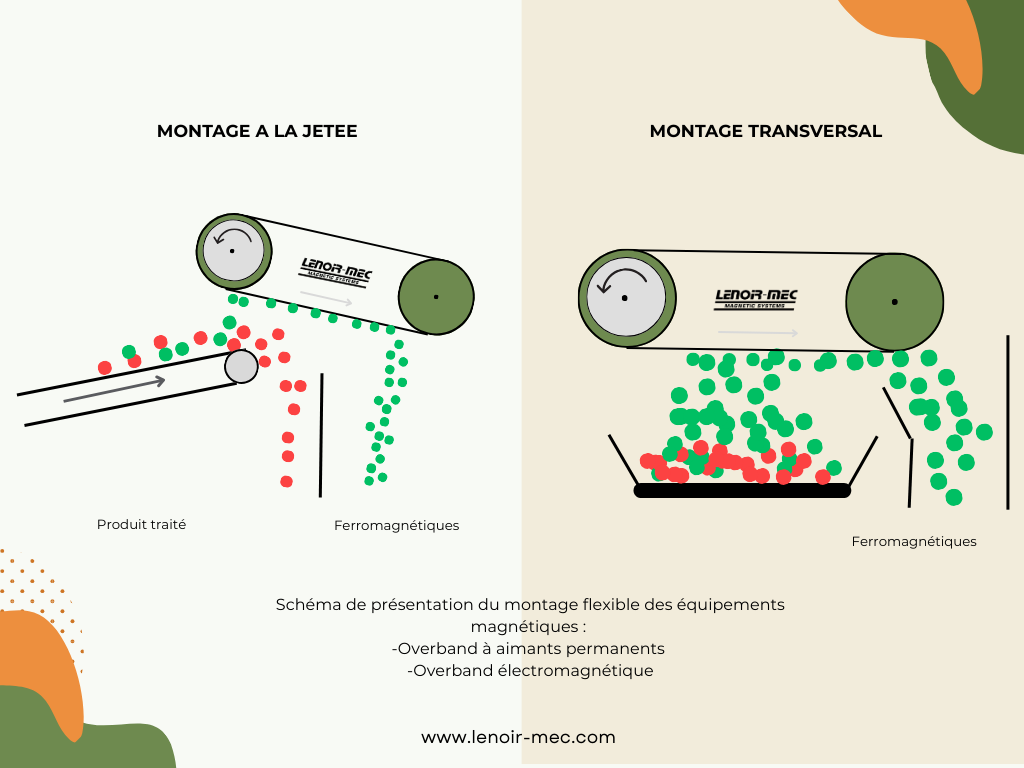
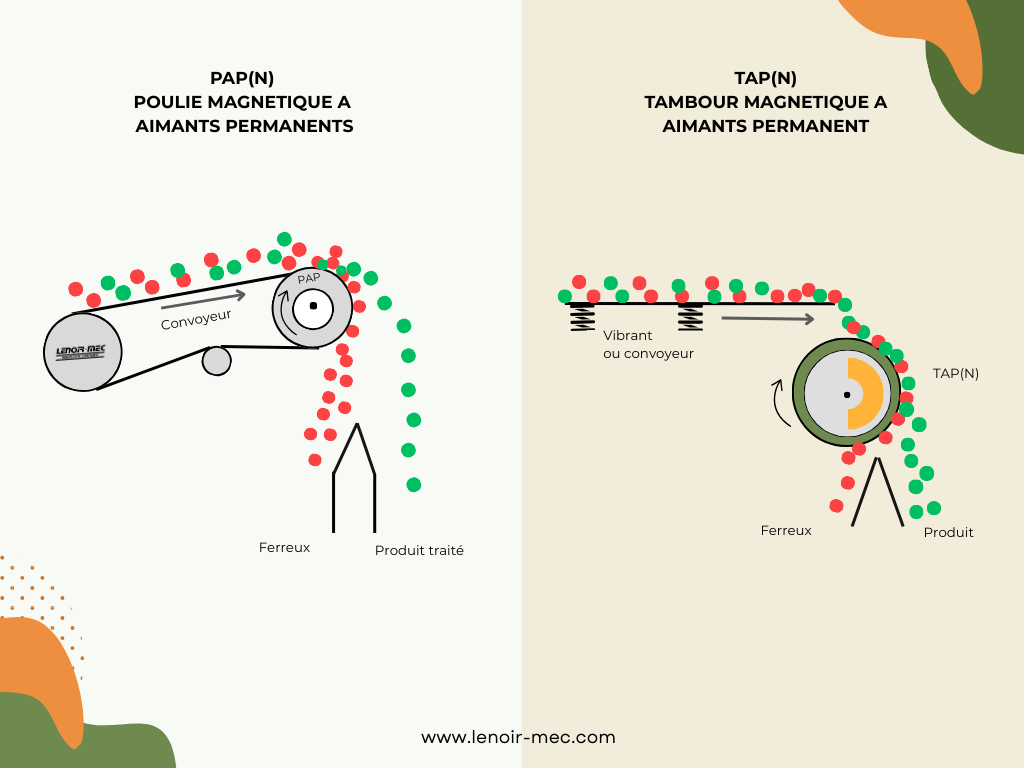
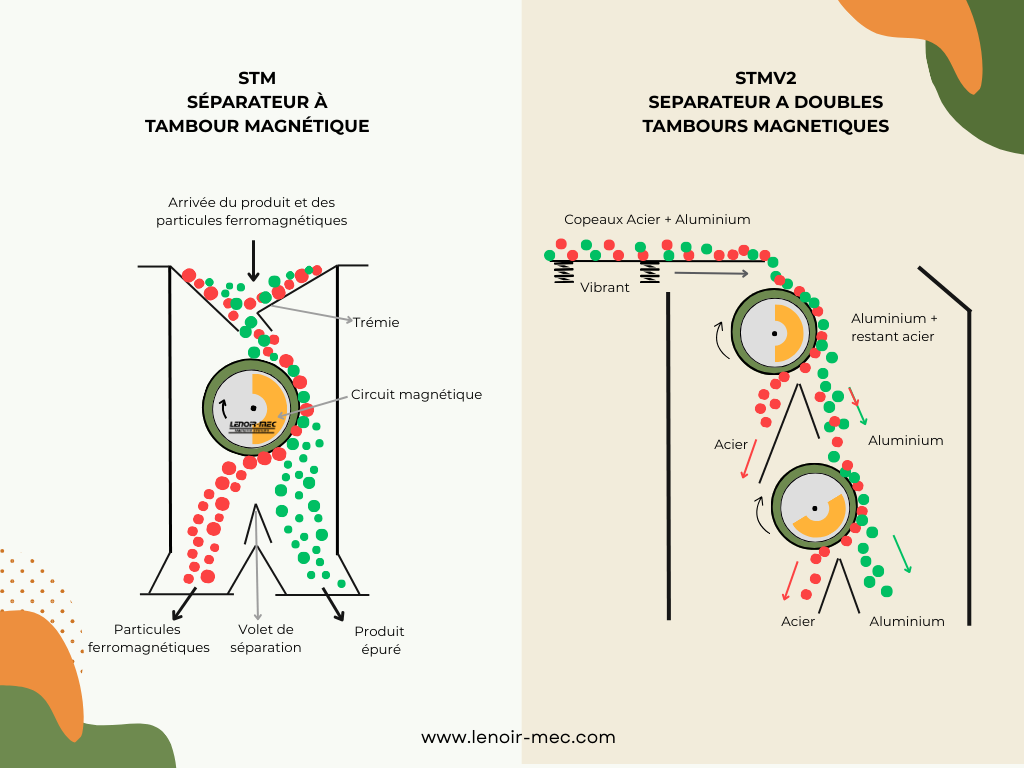
What is an industrial magnetic separator?
An industrial magnetic separator is designed to automatically remove metallic particles from a flow of bulk or solid materials. It uses the properties of a magnetic field to attract and retain ferromagnetic materials (iron and steel) or, depending on the technology used, to separate certain non-ferrous metals such as aluminium.
Installed within a production process, it can be used at different stages: protecting crushers, purifying finished products, recovering valuable metals or improving the quality of recycled materials.
Its role is both technical and economic: reducing downtime, lowering maintenance costs and improving the overall efficiency of the installation. Several technologies are available to meet industrial requirements, including overband magnets, magnetic drums, Eddy Current separators and high-intensity magnetic systems. The right choice always depends on the characteristics of the processed material and the objectives of the application.
Why integrate a magnetic separation solution into your process?
Protect equipment and ensure production continuity :
The presence of metal parts in a material flow can cause significant damage, including crusher failures, conveyor damage, and premature wear of extruders or mills. By removing ferrous contaminants upstream, magnetic separation reduces the risk of unplanned downtime and extends equipment service life.
Improve product quality :
In the food, plastics and chemical industries, the presence of metallic particles can compromise the conformity of the finished product. A properly sized industrial magnetic separation system ensures a cleaner material flow while meeting both industry quality standards and regulatory requirements.
Recover valuable ferrous and non-ferrous metals :
In recycling, quarrying and mining operations, recovering ferrous and non-ferrous metals creates significant value. Efficient magnetic separation increases recovery rates, improves the purity of sorted fractions and enhances the overall profitability of the plant.
| Technology | Target Metals | Key Advantage | Typical Application |
|---|---|---|---|
|
Permanent Magnet Overband Separator
|
Ferrous |
Low maintenance |
Recycling, quarries |
|
Electromagnetic Overband Separator |
Ferrous |
Deep magnetic field |
Recycling, quarries |
|
Eddy Current Separator |
No Ferrous |
Improved accessibility for fast maintenance |
Sorting centre |
|
Magnetic Drum Separator |
Ferrous |
High processing capacity |
Sorting centre, cement plant, foundry |
|
High-Intensity Magnetic Separator |
Ferrous |
High magnetic intensity |
Chemical, pharmaceutical and mining industries |
Main magnetic separation technologies
Several magnetic separation technologies are available, each designed to meet specific requirements in terms of throughput, particle size, operating environment and industrial objectives. The right choice always depends on the type of metal to be removed and how the equipment is integrated into the production process.
A — Permanent Magnet Overband Separator
Operating without any electrical power supply, the permanent magnet overband separator offers low maintenance requirements and outstanding ease of operation. It is ideal for applications requiring continuous separation of ferrous metals while keeping energy costs under control.
B — Electromagnetic Overband Separator
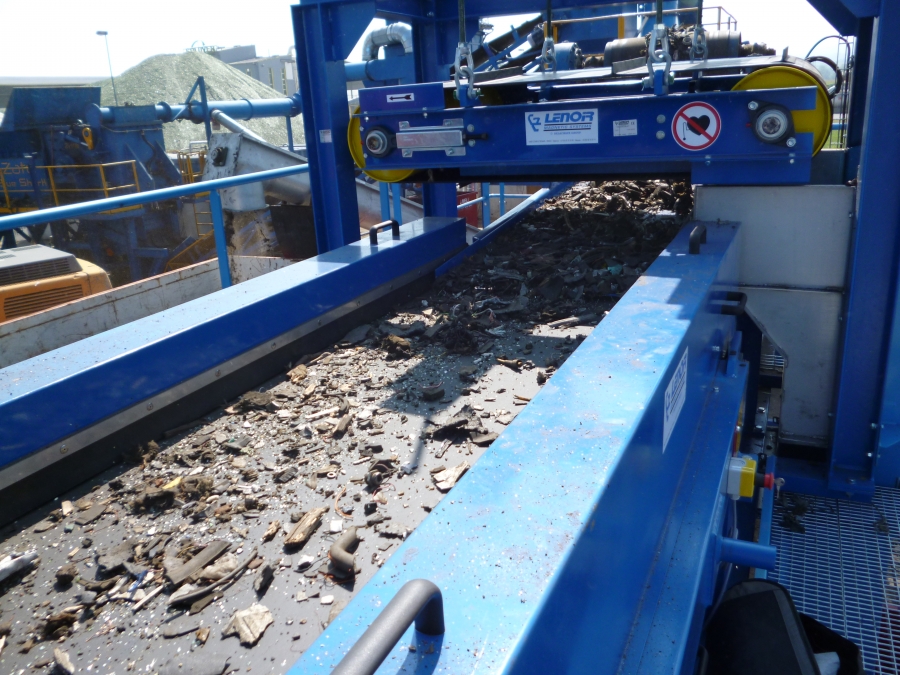
Electromagnetic overband separators generate a deep magnetic field, making them ideal for processing thick material layers. Installed above or at the discharge end of a conveyor belt, the unit efficiently attracts and removes ferrous contaminants.
C — Eddy Current Separator
The Eddy Current Separator (ED-X) is designed to separate non-ferrous metals such as aluminium and copper. It is widely used in recycling facilities and sorting centres to improve the purity of recovered material fractions.
D — Magnetic Drum Separator
The magnetic drum separator provides continuous, automatic separation of ferromagnetic particles from bulk materials. Robust and highly resistant to dusty environments, it is widely used in mining, quarrying and recycling applications.
E — High-Intensity Magnetic Separator
Designed to process weakly magnetic particles, the high-intensity magnetic separator is used for specialised applications requiring highly accurate separation.
How do you choose the right magnetic separator?
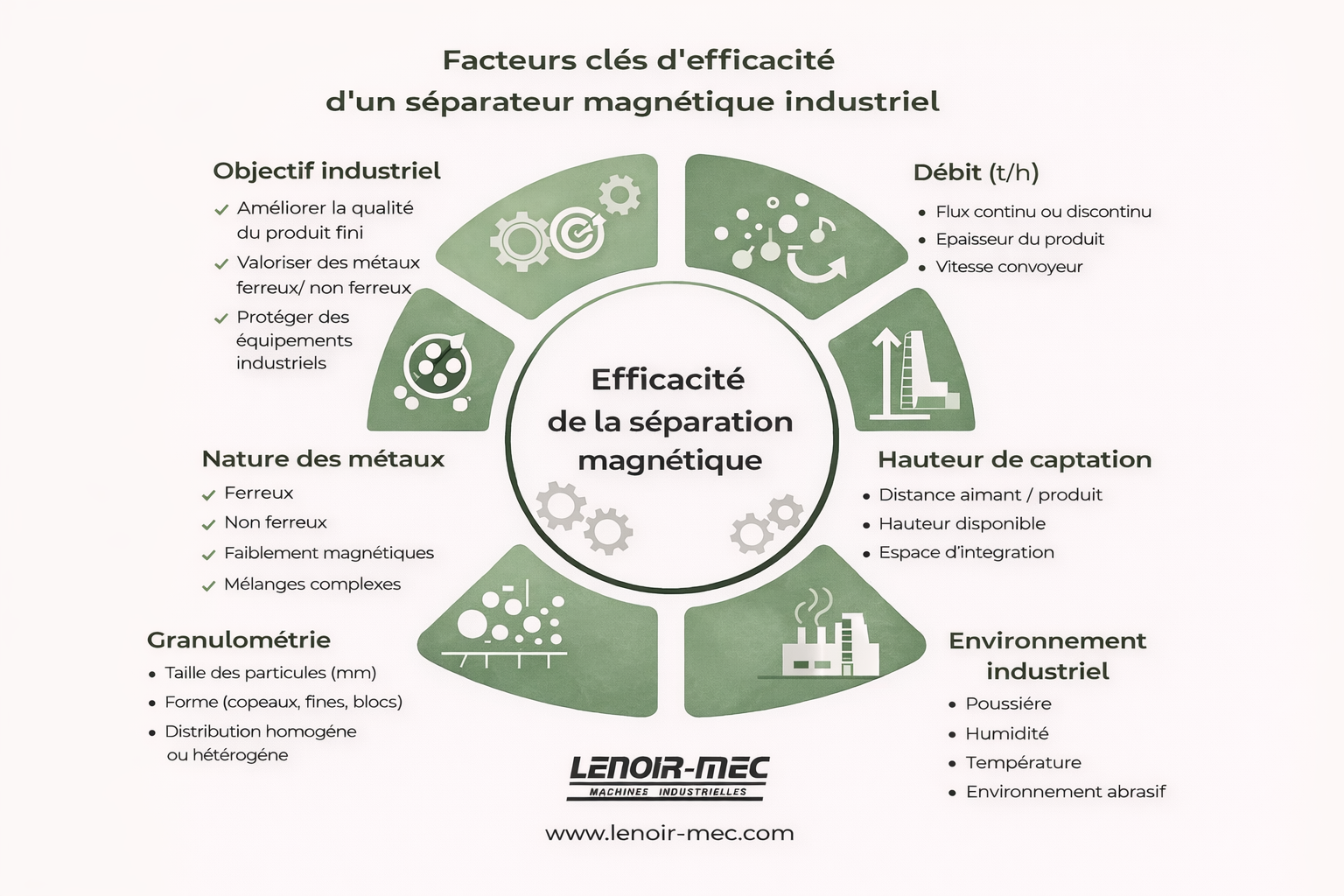
Selecting an industrial magnetic separator cannot be standardised. Every installation has specific constraints that directly influence separation performance.
Nature of the contaminants
The first consideration is the type of metal to be removed. Ferromagnetic particles (iron and steel) require different technology from non-ferrous metals such as aluminium or copper. The size, shape and proportion of metallic contaminants also influence the sizing of the separator.
Throughput and particle size
The material throughput (t/h) and particle size determine both the magnetic strength required and the most suitable technology. A fine, homogeneous material flow requires a different approach from a coarse or heterogeneous material stream.
Installation layout and operating environment
Available headroom, installation space, temperature, humidity, dust and abrasive conditions all influence the choice between permanent magnets, electromagnets or other dedicated magnetic systems.
The separator must be sized according to the throughput and the characteristics of the processed material. For example, a municipal waste stream processed at 150 t/h with a particle size above 50 mm requires a different design from a fine aggregate flow below 10 mm.
Which industries use magnetic separation?
Industrial magnetic systems are used across a wide range of industries where controlling metallic contamination is both a technical and an economic challenge.
Recycling and waste recovery
In sorting centres and waste processing facilities, magnetic separators recover both ferrous and non-ferrous metals, improving the quality of recovered material streams. They help increase recovery rates and optimise the profitability of recycling operations.
Mining and quarrying
In mining and quarrying environments, magnetic equipment protects crushers and mills from metallic contaminants while, in certain applications, contributing to the concentration of specific ores.
Food industry
Metal contamination in food products can lead to major non-compliance issues. Industrial magnetic equipment helps ensure process safety while supporting compliance with quality standards.
Plastics, chemicals and processing industries
Removing metallic contaminants from virgin or recycled raw materials improves the quality of the finished product and reduces manufacturing defects.
In these demanding industrial environments, regular monitoring of magnetic performance is essential to ensure efficient separation and provide long-term protection of the production process.

FAQ: Magnetic Separator
What is a magnetic separator?
A magnetic separator is an industrial piece of equipment designed to automatically remove metallic particles from a material flow. It uses a magnetic field to attract and separate ferromagnetic elements or, with specific technologies, certain non-ferrous metals.
What is the service life of an industrial magnetic separator?
The service life of an industrial magnetic separator depends on operating conditions, the working environment and the maintenance performed. A properly sized system with regular inspections can deliver high performance for many years.
When should an Eddy Current separator be used?
An Eddy Current separator is used when recovering non-ferrous metals such as aluminium, copper or brass is required. It is particularly suitable for recycling centres and material sorting facilities.
How do you determine the correct magnetic intensity?
The required magnetic intensity depends on the type of material to be separated, particle size, working distance and characteristics of the processed flow. A technical assessment helps determine the most effective solution.
Can a magnetic separator operate with wet materials?
Yes, some magnetic separation technologies can be used with wet materials. However, the choice of equipment must take into account the material characteristics and the operating conditions of the installation.
Industrial magnetic separation: optimise your performance
Every industrial site has specific requirements: material characteristics, throughput, installation configuration, operating environment and performance objectives. A standard magnetic separator does not always guarantee optimum efficiency if it is not correctly sized.
A preliminary analysis makes it possible to identify: the most suitable technology, the required magnetic intensity, the optimal position within the production line, mechanical and electrical integration constraints.
Accurate sizing ensures efficient separation, while also reducing downtime, improving equipment protection and providing long-term optimisation of operating costs.
At Lenoir-Mec, we guide you towards the most suitable solution through a fully customised approach: site analysis, equipment sizing, commissioning, responsive support, regular performance checks.
In a competitive industrial environment, choosing the wrong magnetic separation solution can result in thousands of euros in annual costs due to unplanned maintenance.
Our experts help you select a reliable and robust solution.