


Eddy current separator (ED-X)
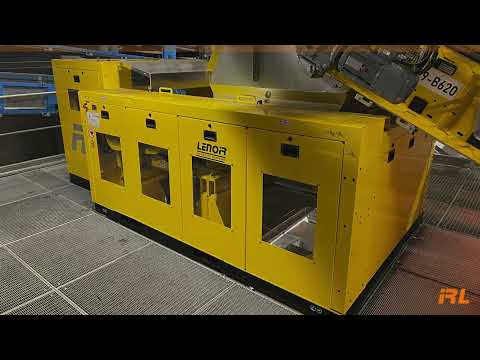
Eddy current separator: efficiently separates non-ferrous metals, ideal for recycling, automotive and mining industries.

In brief
- The eddy current separator (ED-X) recovers non-ferrous metals present in various material flows.
- It is used for metal recycling, industrial waste and municipal solid waste, automotive recycling and WEEE recycling.
- In a sorting line, it is generally installed after a ferrous metal separation stage, such as an overband magnet or a magnetic drum.
- Fields of application
- Operating principles
- Operating tips
- General characteristics
- Case studies
Fields of application


The eddy current separator is widely used in several industrial sectors:
The eddy current separator is one of the most widely used magnetic separators in industrial recycling and waste treatment applications. This product is designed to recover non-ferrous metals present in various material flows.
- Metal recycling: recovery of non-ferrous metals present in flows from shredding and material processing.
- Industrial waste and municipal solid waste: separation of non-ferrous metals present among plastic, glass, wood, rubber or other inert materials.
- Automotive recycling: recovery of aluminium and other non-ferrous metals present in automotive shredder residue.
- WEEE recycling: separation of non-ferrous metal fractions present in waste electrical and electronic equipment.
- Sorting of shredded materials: recovery of non-ferrous metals after the various material preparation and shredding stages.
In a sorting line, the eddy current separator is generally installed after a ferrous metal separation solution, such as an overband magnet or a magnetic drum.
Operating principles
How does an eddy current separator work?
The eddy current separator relies on a high-intensity magnetic field generated by a magnetic rotor integrated in a non-magnetic drum. When conductive non-ferrous metals, such as aluminium, copper or brass, pass through this magnetic field, electric currents known as eddy currents are induced in the metal particles.
The operation of the separator is therefore based on several elements:
- High-speed magnetic rotor: a rotor fitted with permanent magnets rotates at variable speed, creating a powerful magnetic field.
- Permanent magnets: they create a magnetic field suited to the separation of non-ferrous metals.
- Electromagnetic induction: the passage of conductive metals through the magnetic field generates eddy currents.
- Magnetic repulsion: non-ferrous metals are ejected from the material flow and recovered separately.
- Adjustable splitter: it allows the separation to be adjusted according to the materials processed.
For efficient separation, ferrous metals are generally removed upstream using magnetic separation equipment, before the flow passes through the eddy current separator.
Operating tips
Tips for optimum performance of the eddy current separator:
To optimise the separation of non-ferrous metals, several parameters must be taken into account when using the ED-X eddy current separator:
- Prepare the flow upstream: the main ferrous items must be removed before the material passes through the eddy current separator.
- Distribute the material evenly: a uniform feed onto the conveyor promotes more accurate separation of the different fractions.
- Adapt operation to the flow processed: the rotor speed and splitter setting can be adapted to the nature and characteristics of the materials.
- Take particle size into account: the size, shape, density and electrical conductivity of the particles influence their behaviour during separation.
- Avoid overloading the conveyor: an excessively thick layer of material can reduce the quality of non-ferrous metal separation.
The optimum separator configuration therefore depends on the nature of the materials to be processed, their particle size, the throughput and the required level of separation.
General characteristics
Eddy current separators have several distinctive characteristics:
- High efficiency: Efficiently separates even small non-ferrous metals, thereby increasing sorting purity.
- Versatility: Processes various types and sizes of materials, meeting the needs of several sectors.
- Maximum productivity: Designed for continuous high-throughput processing, ensuring high production capacity.
- Precise adjustment: The rotation speed and splitter position are adjustable for optimised performance.
- Controlled consumption: Operates with reduced energy consumption thanks to energy recovery.
- Industrial durability: Designed to withstand the most demanding industrial environments.
- Automated integration: Easy to integrate into automated lines for increased efficiency.Contribution to a circular economy and resource recovery
This type of solution adapts to a wide range of industrial requirements, offering an excellent balance between performance, reliability and operating cost.
Advantages
- Proven magnetic performance
- Customisable to suit your environment
- Improved accessibility for quick maintenance
Services
- Industrial commissioning assistance
- Spare parts stock
- Fast after-sales service response
- Installed base monitoring and periodic performance checks
Frequently asked questions
What is the ED-X eddy current separator used for?
It is designed to recover non-ferrous metals present in various material flows, in recycling and waste treatment. For example, it processes industrial waste and municipal solid waste, automotive shredder residue, WEEE and shredded materials.
How does an eddy current separator work?
A rotor fitted with permanent magnets rotates at variable speed inside a non-magnetic drum and creates an intense magnetic field. Conductive metals such as aluminium, copper or brass are subjected to eddy currents, then ejected from the flow and recovered separately.
Where should the ED-X be installed in a sorting line?
It is generally installed after a ferrous metal separation solution, such as an overband magnet or a magnetic drum. The main ferrous items must be removed upstream for efficient separation.
Which settings optimise separation with the ED-X?
The rotor speed and splitter position are adjustable according to the nature of the flow processed. The material must also be distributed evenly on the conveyor and an excessively thick layer avoided, as the particle size, density and conductivity of the particles influence the result.
What are the main characteristics of the ED-X?
It efficiently separates even small non-ferrous metals, is suitable for continuous high-throughput processing and consumes little energy thanks to energy recovery. It is designed for demanding industrial environments and integrates easily into automated lines.
Technical data
| Type | Product passage (mm) | B (mm) | C (mm) | EA (mm) | Overall length (mm) | Pole wheel motor power (kW) | Gear motor (kW) | Weight excl. accessories (kg) |
|---|---|---|---|---|---|---|---|---|
| ED-X 041/650 | 650 | 670 | 1015 | 2050 | 4000 | 7,5 | 2,2 | 2600 |
| ED-X 041/800 | 800 | 670 | 1015 | 2050 | 4000 | 7,5 | 2,2 | 2800 |
| ED-X 041/1000 | 1000 | 670 | 1015 | 2050 | 4000 | 7,5 | 2,2 | 3000 |
| ED-X 041/1200 | 1200 | 670 | 1015 | 2050 | 4000 | 7,5 | 2,2 | 3200 |
| ED-X 041/1500 | 1500 | 670 | 1015 | 2050 | 4000 | 7,5 | 2,2 | 3600 |
| ED-X 041/1800 | 1800 | 920 | 1442 | 2727 | 4685 | 11 | 4 | 4100 |
| ED-X 041/2000 | 2000 | 920 | 1442 | 2727 | 4685 | 11 | 4 | 4700 |
Advantages
- Proven magnetic performance
- Customisable to suit your environment
- Improved accessibility for quick maintenance
To size your machine, have ready:
- The material handled (type, particle size, moisture, temperature)
- The throughput (t/h or m³/h) and bulk density
- The conveying: belt width or chute section, speed, burden depth
- The contaminants to remove (size and shape of ferrous or non-ferrous parts)
- Site constraints: available space, ATEX zone, hygiene standards
A photo of the installation or a drawing is enough to start: attach it to your request. Unsure about a technical term? Magnetism glossary →
Request a quote


A project, a flow constraint? Our engineers size the right equipment for your installation.
Talk to an expert